
The Trees from Hell
Altadena’s war against a weed, the Tree of Heaven

In a fire-fractured community, the perimeter between fringe and civilized is quickly obfuscated. Fire litigation billboards tower over abandoned shopping centers, contractor advertisements litter the street like Las Vegas escort flyers, and the dust – oh, you can’t imagine the dust. Of all the unwelcome takeovers that have plagued Altadena’s deserted streets in the last nine months, residents have recently discovered another insidious threat to our community. This time it’s the unmitigated spread of a prolific, stinky little weed called Ailanthus, or Tree of Heaven.

The scene around town lately.
Originally from China, Ailanthus was introduced in the Colonial Era as a fast-growing shade tree to benefit burgeoning city planning. Later it became famous as the subject of A Tree Grows in Brooklyn. But this ain’t Andrew Jackson’s Magnolia tree. Here in the New Millennium, Ailanthus is an invasive pest. For starters, it stinks – some say like Doritos or “old peanut butter.” Ailanthus is also an enemy to fragile ecosystems because it clones easily through suckering and its roots undergo allelopathy, a process that emits toxins in the soil to suppress the growth of surrounding plants. Possibly worst of all, Ailanthus is the preferred home of the spotted lanternfly, making it a symbiotic harbinger of End Times.
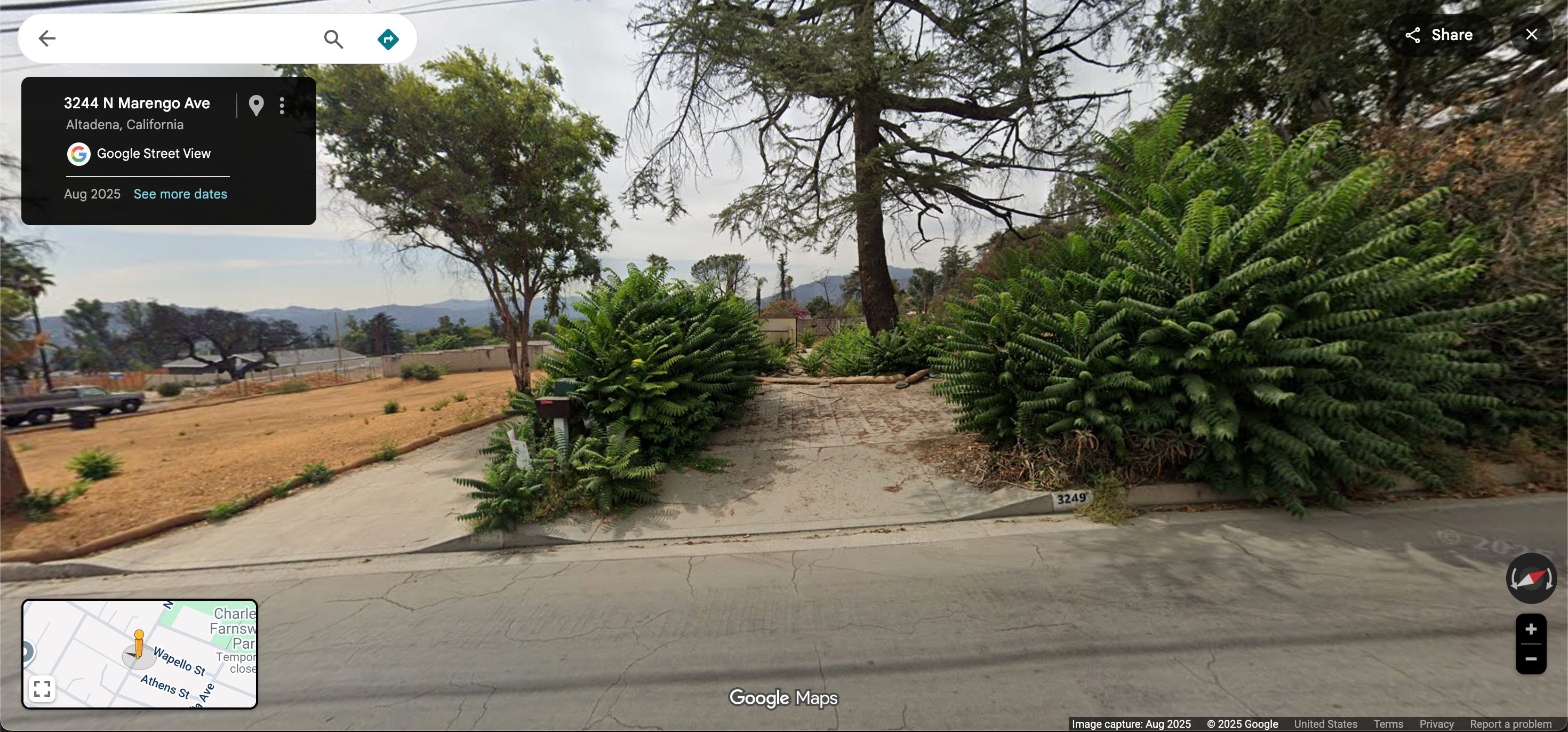
Ailanthus growing wildly in a lot that’s been cleared post-fire.
For years we’ve had an Ailanthus rooted somewhere in our yard but diligently snuffed out its progeny with regular upkeep. Now that we (and more than half the town) are displaced, yard maintenance has fallen off the list of priorities. At a time when Altadena’s fire-scorched terrain is trying desperately to establish regrowth, Ailanthus is sabotaging our landscape. It thrives in unfavorable growing conditions, and driving around Altadena, full-on forests of Ailanthus are visible across empty lots.
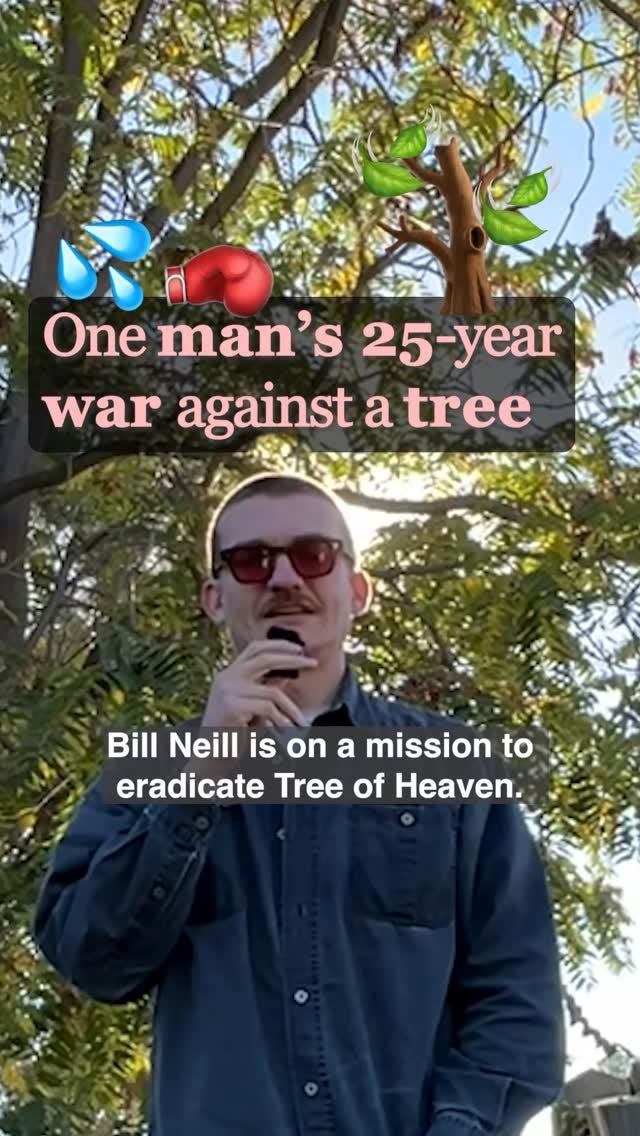
Mercifully, the threat of Ailanthus is not new. Many residents have been fighting it for years. Some, like licensed herbicide applicator Bill Neill, recognize that now is the time to eradicate the plant while it’s young, before towering shoots become widespread and unmanageable. Over the last few weeks, Bill volunteered his services in our neighborhood and many others in Altadena. He offers his expertise free of charge and considers his work a public service project (though he does accept tips).
I never dreamed that so much of my day would be dedicated to a common weed, but here we are. Ailanthus is just another anomaly Altadenans have been forced to spend hours thinking about, following up on, and paying for in the wake of the Eaton Fire. Alongside, of course, the ever-present, mind numbing bureaucracy of calling insurance, sourcing contractors, and working with LA County – while simultaneously finding time for our jobs and families.
The Ailanthus invasion has also taken on a secondary meaning. It’s become a hyper-fixation and a sort of scapegoat; a microcosm of the post-fire experience in general. Across Altadena social media groups, locals fight about anything, the weed included (“Well I’m staying on top of it but my neighbors don’t seem to be.”) Petty infighting is just a way for residents to channel their outrage and assert control amidst bigger, more daunting issues, like rebuilding homes or seeking accountability for the fire. The stupid, stinky Tree of Heaven is somehow both a genuine problem, and an overwrought coping mechanism.
The irony of the name “Tree of Heaven,” is not lost on me, either. This misnomer is just another punchline in the surrealist comedy Altadena has unwittingly starred in since January 7th. Our perfect little town, now blighted by a heavenly tree after being leveled by the flames of Hell.
Half the time spent in my yard is fighting these fuckers.