
Superfund Me
Eaton Fire debris cleanup begins

It’s been over a month since the firestorm blew in and uprooted our relative sanity. We’re trying to adapt to a new normal, but the days are filled with unending chores - items to replace, calls to make, relief forms to sign. Turns out losing your town is a full time job. Yet these very real, very annoying tasks are nothing compared to the emotional hurdles that come with seeing our once-serene suburban streets invaded by heavy machinery and PPE-covered crews leading Phases 1 and 2 of the Debris Removal Program.
The LA County Recovers website explains the fire cleanup in detail, including an emotional educational video soundtracked by soothing piano music. I just know the County Public Relations intern who edited this clip was pissed at their boss for the tight turnaround time.
Phase 1 denotes Hazardous Debris Removal, managed by the U.S. Environmental Protection Agency (EPA). For the last few weeks, crews have been combing through the ashes of Altadena looking for potentially-dangerous materials such as pesticides, solvents, and paint. They’re also searching for items that could spark fires if incorrectly disposed of, like lithium batteries and propane tanks.
In 2023, improper mingling of toxic sludge caused a rare chemical reaction at the Chiquita Landfill near Santa Clarita. Local residents complained of persistent headaches and when the South Coast Air Quality Management District showed up, they discovered an underground fire with bubbling ponds and “rivers of odorous waste.” Officials called the conditions “almost volcanic,” with occasional geyser-like bursts of steaming hot liquid. More than two years later, the subterranean fire is still burning. As penance for their folly, the landfill’s operators have set up a community relief program with relocation assistance. There is an info seminar this week at the Embassy Suites in Valencia, just three miles from fun at Six Flags Magic Mountain.
The EPA seems to be doing their due diligence in Altadena, what with the feel-good videos and all. When hazardous materials are located, workers transport the items to temporary staging areas: Altadena Golf Course (a notable filming location for Mad Men), Farnsworth Park (where my daughter had her birthday party just three months prior), and Lario Park in Azusa, which is right next to a river that supplies a portion of Los Angeles drinking water (prompting local uproar). Once inside the staging areas, the debris is sorted, packaged, and planned for removal to other disposal facilities – yet to be announced. If we’re lucky, they’ll pick a remote desert landfill. But hey, you never know. The way Project 2025 is going, maybe they’ll just dump everything into the ocean.


Phase 1 is now complete for my neighborhood, which would be obvious even if we didn’t track progress using the SoCal Fires 2025 - Parcel Status LookUp map. Every time we visit “the crater,” as we now call our former home, there’s new evidence of disruption: charred paint cans dug up by the EPA. Strange hieroglyphics mark our blackened trees from county arborists labeling dead growth. We noticed a gas station coffee cup and empty water bottles perched on a retaining wall, because when the entire town is trash, it doesn’t matter where you leave your actual garbage.
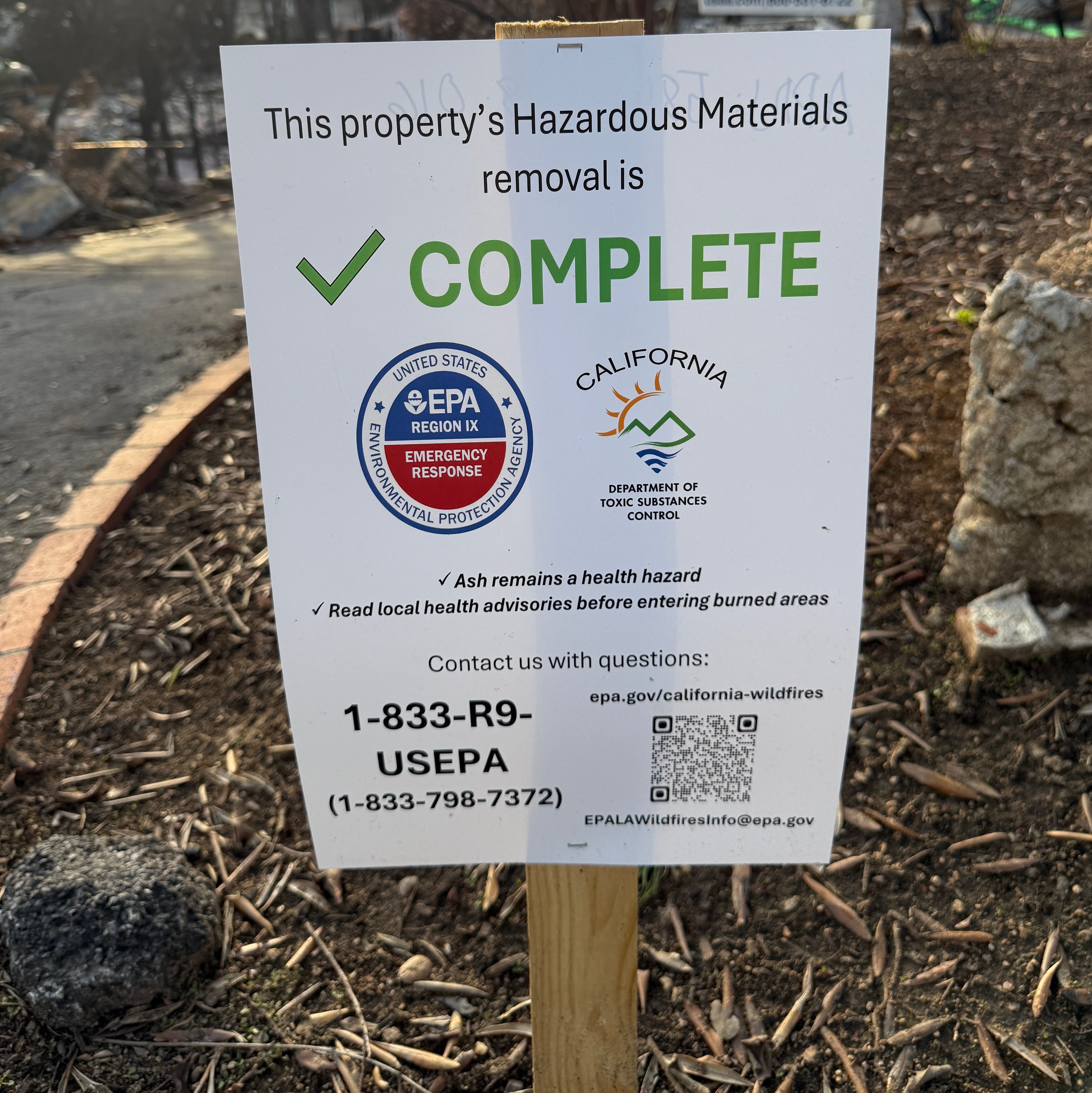
As properties proceed through Phase 1, the U.S. Army Corps of Engineers step in and begin Phase 2 simultaneously. Phase 2 is the complete removal of debris: nonspecific burned materials, foundations, dead trees, chimneys, and up to six inches of ash-contaminated soil. Residents must opt in to Phase 2, signing a right-of-entry form. For those who want to handle debris removal privately, there’s a different form:
“Property owners who choose this option must submit an online opt-out form, apply for a permit through EPIC-LA, and obtain certification from the Environmental Protection Agency (EPA) confirming completion of Phase 1 hazardous material removal. Once approved, property owners and their private contractors can begin the debris removal process, following the same standards required by the U.S. Army Corps of Engineers.”
Judging by local social media posts, this option is preferred by those who distrust the processes outlined by the county. These residents are typically wealthy, too impatient to wait for the U.S. Army Corps of Engineers, and believe wholeheartedly in a new bastion of American autonomy, if you catch my drift. Anyone familiar with the Los Angeles permitting process knows you don’t put the cart before the horse. I suspect these folks will have their own waiting game to play, though it’s still too early to be judgmental. Ironically the first Altadena fire debris removal permit was released the very day I typed this, but I feel justified in my shade because the permittee called the process “a headache.”
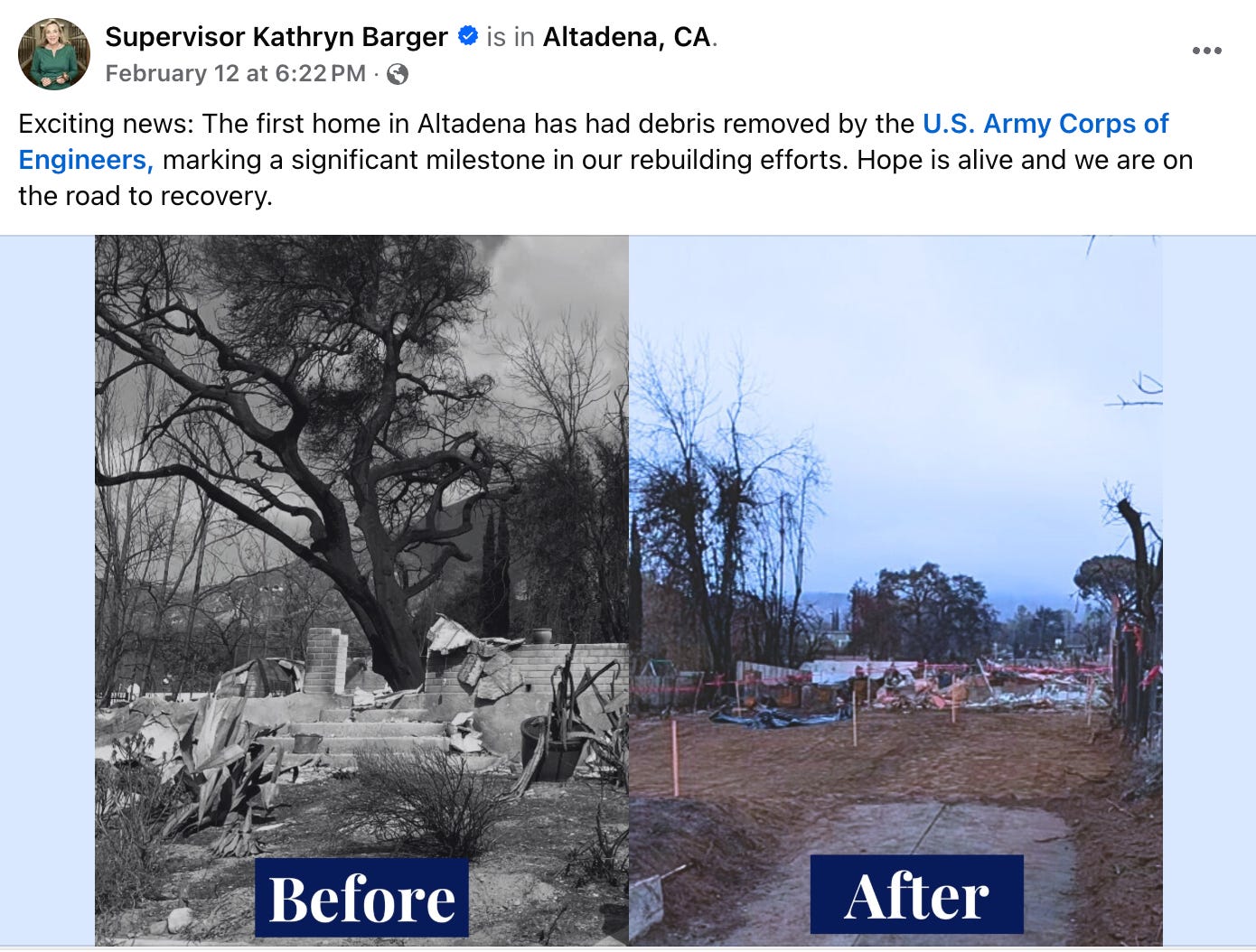
Our county supervisor (Altadena is unincorporated and does not have a mayor) shared the above before-and-after photos of a lot that cleared Phase 2 and is ready for rebuilding. A comment on the post reads, “And thousands more to go. Clearing one lot doesn’t excite me very much.” So now, we wait, some of us more prudently than others.